
Mon–Sat 8 am–6 pm · Sun & holidays 9 am–4 pm — open 7 days a week Mon–Sat 8–18 · Sun 9–16 +43 1 486 21 09Call us office@polisi.at DE|EN
−15 %
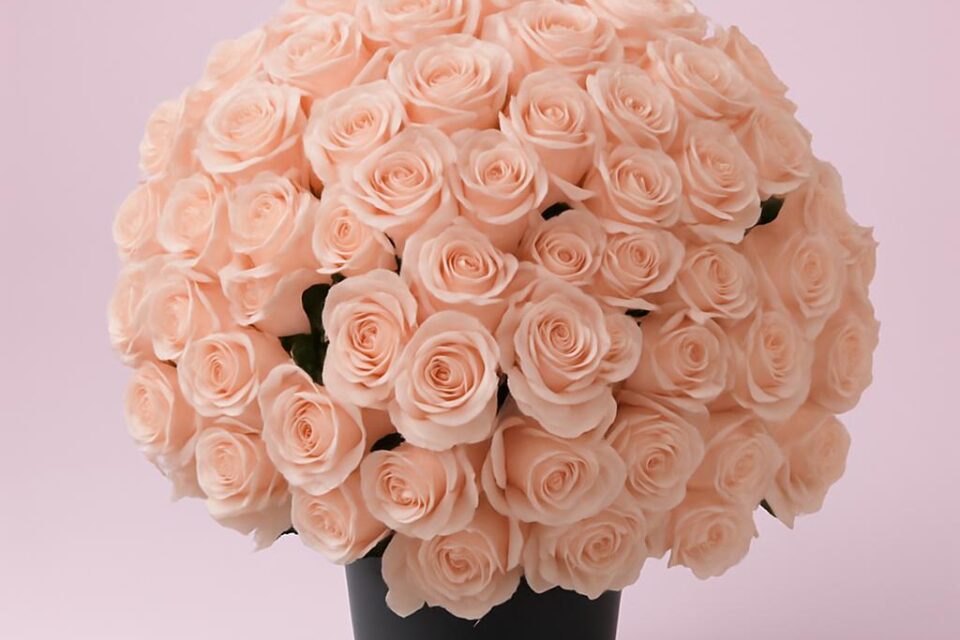
Large rounded arrangement of numerous pale pink rose blooms in a tall dark vase

Cut flowers > Rose bouquets

Pink Cut Roses (Rosa spp.) – Floral Arrangement

200 rosafarbene Schnittrosen (Rosa spp.) bilden hier ein großes, dicht gestecktes Blumenarrangement. Sauberes Wasser, ein kühler Standort und regelmäßiges Nachschneiden unterstützen eine möglichst lange Haltbarkeit in der Vase.

Statt 900,00 765,00 incl. VAT

All prices incl. VAT. plus shipping — delivery information

In stock · pickup today possible

Free pickup at our garden centre Courier delivery Vienna & surroundings Advice: +43 1 486 21 09
Order today — same-day pickup usually possible (Mon–Sat 8–18, Sun 9–16).
Fresh flowers & plants: our own courier delivers across Vienna and up to 25 km beyond. Durable items ship Austria-wide by post. Delivery details
Questions about this product? +43 1 486 21 09 or office@polisi.at

Category: Cut flowers > Rose bouquets · SKU: SCHNITTROSE-ROSA-ARR

Product details

Pink cut roses (Rosa spp.) bring a classic floral character through their densely petalled, pale pink blooms. The arrangement shown is large and rounded, with numerous roses ranging from partly open to fully open.

The photograph does not reveal foliage, complete stems or a plant label, so the species and cultivar cannot be identified reliably. The visible flowers clearly support identification as cultivated rose hybrids of the kind commonly grown for the cut-flower trade.

For better vase life, place the stems in a thoroughly cleaned vase, remove any leaves below the waterline and recut the ends regularly. Keep the arrangement in a bright, cool position away from direct sun, radiators, draughts and ripening fruit.

Polisi plant knowledge

Care guide

The essentials first, followed by clear, practical details for every care topic.

Botanical nameRosa spp.; the visible flowers do not allow a reliable identification to species, hybrid or cultivar level.
01

Watering

Fill a clean vase one-third to one-half full with fresh, cool water, covering approximately 10–15 cm of the stems. Check the level daily and top up as required; inspect it morning and evening during summer heat and at least once a day in cooler winter rooms. Replace all water every 1–2 days. A finger test does not apply without growing medium; check moisture by observing the water level, smell and clarity. Waterlogging in soil is not relevant, but leaves and blooms must not remain submerged.


02

Light

Place in bright, indirect light or partial shade, away from direct midday and afternoon sun. Strong sunlight speeds up water loss, colour fading and flower opening.

03

Best location

Suitable for a cool indoor position protected from draughts and kept away from radiators, air conditioners and ripening fruit. Ethylene released by fruit can accelerate flower ageing.

04

Temperature

Aim for approximately 15–20 °C; a slightly cooler position overnight may support vase life. Protect the arrangement from frost and prolonged temperatures above 24 °C.

Foundation

Soil & nutrition

Humidity

Normal indoor humidity of roughly 40–60% is suitable. Avoid routinely misting the blooms, as persistent surface moisture may encourage grey mould.

Soil

Cut roses require no potting medium and should not be planted in compost. A clean vase, fresh water and hygienically recut stems are the relevant requirements.

Nutrient needs

Cut roses need only a mild, balanced supply from cut-flower food. It provides measured sugars and helps stabilise vase water; using a stronger concentration does not extend vase life and may impair water uptake.

Fertilising

Use only commercial cut-flower food, diluted according to the manufacturer's instructions for the actual volume of water. Add a fresh dose at every complete water change throughout the vase period; do not use ordinary houseplant fertilizer.

Planting

Do not plant out. Before arranging, remove 1–2 cm from each stem at an angle with a clean, sharp knife and strip off every leaf that would sit below the waterline.

Plant spacing

Distribute the stems so the blooms are not crushed and some air can move between them. Inspect a dense arrangement daily and promptly remove wilted or damaged flowers.

Through the year

Flowering & seasonal care

Flowering period

The image shows numerous densely petalled, pale pink blooms at different stages of opening. The parent plants' flowering season cannot be determined from the arrangement; commercially grown cut roses are generally supplied throughout the year.

Pruning

At every water change, recut 1–2 cm from the stem ends at an angle using a clean, sharp knife, usually every 1–2 days. Do not crush the stems, and remove spent flower heads promptly.

Repotting

Repotting does not apply to cut roses. Instead, clean the vase at every water change, recut the stems and return the arrangement to fresh water.

Overwintering

During winter, do not leave the arrangement outdoors or directly against cold window glass. Choose a bright, frost-free and preferably cool indoor room, keep it away from heating, and continue checking the water level daily.

Hardiness

Cut stems have no winter hardiness rating and cannot be overwintered outdoors. Keep the arrangement frost-free; hardiness of the unidentified parent plants would vary among rose hybrids.

Plant profile

Growth & origin

Life cycle

Living roses are perennial woody plants. The cut stems shown are in a limited post-harvest phase and will not develop into a permanently growing plant.

Mature size

The photograph shows a large, rounded arrangement made up of numerous individual blooms. Exact height and diameter cannot be derived without a reliable scale and will also depend on stem length and flower count.

Pot / sale size

No pot size is recommended because these are cut flowers. Use a stable, thoroughly cleaned vase with an opening wide enough to hold the stems without crushing and enough weight to support the large arrangement safely.

Origin

The genus Rosa occurs naturally mainly across temperate regions of the Northern Hemisphere. Modern cut roses have complex cultivated hybrid ancestry; the production country cannot be established from the photograph.

Propagation

This arrangement is not intended for propagation. Living roses are generally reproduced true to cultivar through budding, grafting or professionally rooted cuttings; seed does not reliably preserve a hybrid cultivar's traits.

Good to know

Healthy & safe

Safety and toxicity

Roses are not generally regarded as poisonous to people, dogs or cats. Florist-treated cut roses and their vase water should still not be consumed, and any thorns remaining on the stems may cause injury.

Common problems

Common issues include drooping flower heads, cloudy or unpleasant-smelling water, dry leaf edges and grey mould. Use a clean vase, replace all water regularly, recut the stems, provide a cool position and remove decaying material immediately.

Note: Location, season, pot size and weather can change the plant’s actual care needs.

Subtotal0,00  Cart