
Mon–Sat 8 am–6 pm · Sun & holidays 9 am–4 pm — open 7 days a week Mon–Sat 8–18 · Sun 9–16 +43 1 486 21 09Call us office@polisi.at DE|EN
−20 %
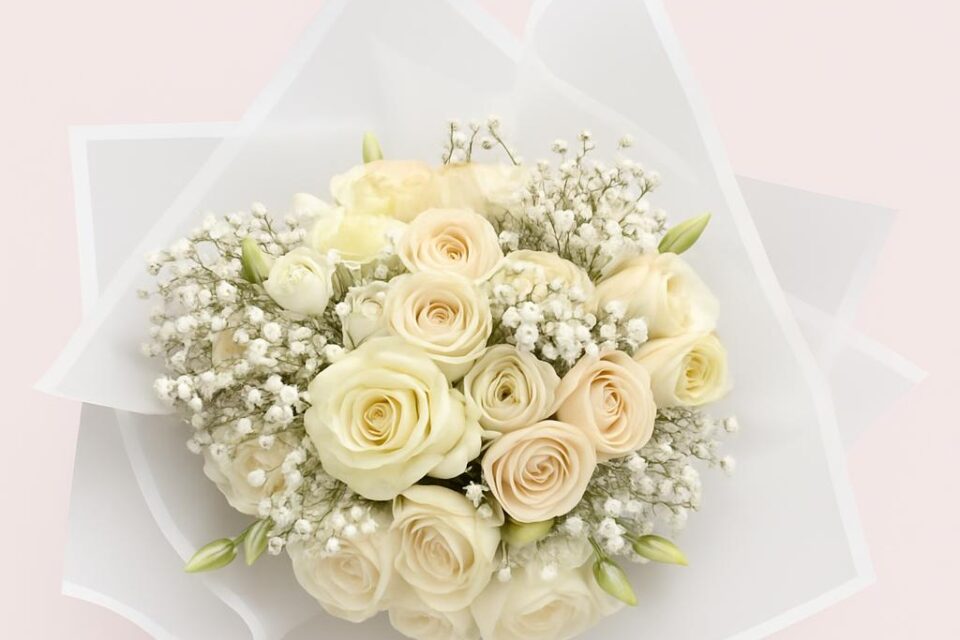
Round bouquet of cream roses and ranunculus with white lisianthus and fine baby's breath in white wrapping

Cut flowers > Rose bouquets

Cream Ranunculus and Rose Bouquet – Ranunculus & Rosa

Der cremefarbene Ranunkel-Rosen-Strauß mit Ranunculus und Rosa verbindet dicht gefüllte Blüten mit luftigem Schleierkraut. Weiße Lisianthusblüten und Knospen ergänzen die runde, festliche Gestaltung. Jede Blüte zeigt natürliche Abweichungen in Creme, Elfenbein und zartem Rosé.

Statt 100,00 €80,00 €incl. VAT

All prices incl. VAT. plus shipping — delivery information

In stock · pickup today possible

Free pickup at our garden centre Courier delivery Vienna & surroundings Advice: +43 1 486 21 09
Order today — same-day pickup usually possible (Mon–Sat 8–18, Sun 9–16).
Fresh flowers & plants: our own courier delivers across Vienna and up to 25 km beyond. Durable items ship Austria-wide by post. Delivery details
Questions about this product? +43 1 486 21 09 or office@polisi.at

Category: Cut flowers > Rose bouquets · SKU: STRAUSS-RAN-ROS-CREME

Product details

This cream ranunculus and rose bouquet brings together the many-petalled flowers of Ranunculus asiaticus and classic roses in soft ivory and cream. A few blush-toned blooms add gentle warmth without changing the restrained colour palette.

Fine sprays of baby's breath lighten the closely arranged bouquet, while white lisianthus flowers and tapered buds add shape between the roses and ranunculus. No particular cultivar can be confirmed from the photograph.

The bouquet works well as a gift, table arrangement or floral accent for a special occasion. Recut the stems, use a thoroughly clean vase and replace the water regularly to help the flowers remain fresh.

Polisi plant knowledge

Care guide

The essentials first, followed by clear, practical details for every care topic.

Botanical nameRanunculus asiaticus, Rosa hybrids, Gypsophila paniculata and Eustoma grandiflorum
01

Watering

Add approximately 500–1,000 ml of fresh, cool water according to the vase size, covering the lower stem ends without submerging any leaves. Check the water level and clarity daily; a finger test does not apply to cut flowers. Replace the water every day in summer or warm rooms and at least every two days in cooler conditions, rinsing the vase each time. Do not allow stagnant water or an overcrowded vase, as bacteria-rich water quickly damages the stems.
02

Light

Place in bright, indirect light or partial shade, away from direct midday sun. Strong sunlight speeds up wilting and can dry the edges of pale petals.

03

Best location

Choose a cool position protected from draughts and radiators. Keep the bouquet away from ripening fruit, which releases ethylene and accelerates flower ageing.

04

Temperature

Around 15–20°C is ideal; a cooler frost-free position overnight can support vase life. Temperatures above 22°C generally cause the flowers to fade more quickly.

Foundation

Soil & nutrition

Humidity

Normal indoor humidity is suitable. Avoid routinely misting the blooms, as trapped moisture in densely petalled flowers can encourage grey mould.

Soil

No growing medium is required because this is a cut-flower bouquet. Place the freshly trimmed stems only in a thoroughly cleaned vase containing fresh water.

Nutrient needs

Cut stems do not need conventional NPK feeding. Correctly measured cut-flower food supplies sugar and helps stabilise the vase water; overdosing may encourage bacteria and damage the stems.

Fertilising

Do not use houseplant fertiliser. Add cut-flower food to fresh vase water at the manufacturer's stated dose, renewing it after each complete water change throughout the year and never increasing the concentration.

Planting

Do not plant outdoors or in a container. Before arranging, use a clean, sharp knife or secateurs to remove 1–2 cm from each stem at an angle and strip off all foliage that would sit below the waterline.

Plant spacing

Arrange the stems loosely in a sufficiently wide vase to allow some air movement between the blooms. The opening should support the tied bouquet without crushing or tightly pinching the stems.

Through the year

Flowering & seasonal care

Flowering period

Densely petalled, cup- to rosette-shaped flowers in cream, ivory, white and pale blush, contrasted by airy sprays of white baby's breath. The bouquet includes both open blooms and buds at different stages of development.

Pruning

Recut approximately 0.5–1 cm from the stem ends every two days. Remove faded individual flowers and any soft or discoloured stems promptly without damaging healthy blooms.

Repotting

Repotting does not apply to cut flowers. At each water change, lift out the bouquet, wash the vase thoroughly, recut the stem ends and return them to fresh water.

Overwintering

Do not overwinter or expose to frost. During winter, keep the bouquet away from radiators and cold draughts, and continue checking the water level daily despite slower evaporation.

Hardiness

This cut-flower bouquet is not winter hardy and must not be exposed to frost. Even brief freezing conditions may permanently damage the blooms and water-conducting stem tissue.

Plant profile

Growth & origin

Life cycle

A short-lived cut-flower arrangement; when supplied fresh and cared for well, it will often last around 5–10 days in a vase. Individual spent flowers may need to be removed sooner.

Mature size

The visible product is a compact, round hand-tied bouquet. Exact dimensions cannot be established without a scale; select a vase that supports the bundled stems while allowing the flower head to sit freely above the rim.

Pot / sale size

This is not a potted product. A stable, clean vase with a generous opening is recommended, ideally tall enough to support roughly one-third to one-half of the visible stem length.

Origin

The bouquet is made from commercially cultivated cut flowers. The visible arrangement does not establish a specific growing country or floristry production site, so none is claimed.

Propagation

This bouquet is not intended for propagation. The flowering stems generally do not root reliably in vase water, and they cannot be expected to produce plants true to any original cultivar.

Good to know

Healthy & safe

Safety and toxicity

Not intended for consumption. Ranunculus sap and components of baby's breath may irritate the skin, mouth or digestive tract; as a precaution, keep the bouquet away from children and pets and wash hands after trimming. Rose stems may retain small thorns despite florist preparation.

Common problems

Cloudy or unpleasant-smelling water indicates bacterial growth: clean the vase immediately, replace the water and recut the stems. Drooping heads commonly result from heat, low water or blocked stem tissue. Brown, damp petals or grey growth may indicate Botrytis; remove affected blooms and move the bouquet to a drier, better-ventilated position.

Note: Location, season, pot size and weather can change the plant’s actual care needs.

Subtotal0,00 € Cart
WhatsApp